
Introduction
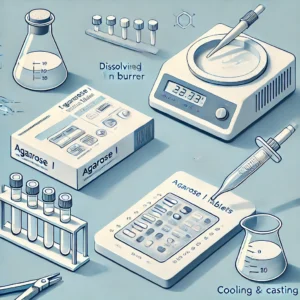
Agarose I tablets are widely used in molecular biology for applications like gel electrophoresis, DNA separation, and protein analysis. Composed of highly purified agarose, these tablets dissolve easily in buffer solutions, providing a convenient way to prepare agarose gels of consistent quality. The use of agarose, as documented by National Institutes of Health (NIH), plays a significant role in molecular separation techniques, making it indispensable in genetics, microbiology, and clinical research.
Properties of Agarose I Tablets
Agarose I tablets are made from purified agarose derived from red algae, a substance valued for its high gel strength and low background fluorescence. Studies by Yale University have shown that agarose’s molecular structure provides stability, allowing efficient separation of nucleic acids based on size. Research from Harvard University also demonstrates how the purity and low electroendosmosis (EEO) of Agarose I enhance gel quality, making it an ideal medium for DNA and RNA electrophoresis.
Applications in Molecular Biology
1. Gel Electrophoresis
Agarose I tablets are predominantly used in gel electrophoresis for separating DNA fragments. The Centers for Disease Control and Prevention (CDC) highlights its role in clinical diagnostics and genetic testing, where agarose gel electrophoresis provides high-resolution DNA separation for disease detection.
2. Nucleic Acid Separation
In research and forensic science, Agarose I tablets are crucial for the separation of DNA and RNA. The Federal Bureau of Investigation (FBI) uses agarose gel electrophoresis for DNA analysis in forensic investigations, which plays a major role in genetic fingerprinting.
3. Protein Analysis
Although more commonly used for nucleic acids, agarose can also separate certain proteins. Research by Stanford University has shown that low-melting agarose gels are beneficial for studying large protein complexes and interactions, providing insights for structural biology.
Advantages of Agarose I Tablets in Lab Settings
The National Institute of Standards and Technology (NIST) outlines several benefits of Agarose I tablets for laboratory use, including their convenience, reproducibility, and quality. Unlike powdered agarose, these pre-measured tablets reduce handling time and the risk of contamination.
- Easy Preparation: Agarose I tablets dissolve quickly and uniformly in buffer, ensuring consistent gel quality and concentration. Research by University of California, Berkeley suggests this simplicity saves time during lab preparation.
- Consistent Gel Strength: High gel strength allows clear resolution of DNA bands, especially for applications in gene cloning, as noted by Johns Hopkins University.
- Low Background Fluorescence: Agarose I tablets exhibit low background fluorescence, improving visualization when using fluorescent dyes. This advantage is critical in assays supported by the National Cancer Institute (NCI), where DNA and protein markers are studied under fluorescent microscopy.
Protocols for Using Agarose I Tablets
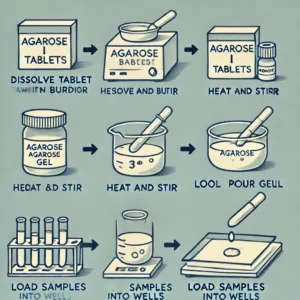
The University of Wisconsin-Madison recommends the following steps for preparing an agarose gel using Agarose I tablets:
- Tablet Dissolution: Place one Agarose I tablet in a specified volume of buffer and heat until fully dissolved.
- Cooling and Gel Casting: Allow the solution to cool before pouring into a gel mold. Studies from University of Pennsylvania emphasize that consistent gel casting provides reproducible results.
- Gel Electrophoresis: Load samples into wells and run the electrophoresis under appropriate voltage. Research by MIT shows that precise voltage settings enhance separation clarity, especially in genomic studies.
Research and Future Directions
Agarose I tablets continue to be a focal point in electrophoresis research due to their versatility and reliability. The Food and Drug Administration (FDA) supports studies using agarose for gene therapy vectors, where the clear separation of genetic materials is essential. Additionally, advancements in molecular diagnostics, such as studies at the University of Chicago, aim to develop more sensitive assays with agarose as a key component in diagnostic platforms.
Environmental Considerations
As part of an eco-friendly initiative, the Environmental Protection Agency (EPA) and several academic institutions have begun investigating sustainable alternatives for agarose sourcing. Seaweed cultivation methods and agarose recycling in the lab are under exploration, as documented by the National Oceanic and Atmospheric Administration (NOAA), to ensure a continuous, sustainable supply of high-quality agarose.
Conclusion
Agarose I tablets offer a standardized, high-quality solution for molecular biology applications, making them a reliable choice in research and diagnostic labs worldwide. Supported by extensive studies from leading institutions such as the American Society for Microbiology (ASM), Agarose I remains essential for effective gel electrophoresis and nucleic acid separation, with ongoing research and innovation ensuring it adapts to emerging scientific needs.