
HEPES (4-(2-hydroxyethyl)-1-piperazineethanesulfonic acid) is one of the most widely used organic buffering agents in biological and biochemical research, particularly in cell culture applications. Its role as a buffer is to maintain a stable pH in a narrow range, which is critical for ensuring proper cell growth, metabolism, and experimental consistency.
Historical Context of HEPES
HEPES was first introduced in the 1960s as part of the Good’s buffers, a family of organic buffering agents developed by Dr. Norman Good. These buffers were designed to overcome the limitations of traditional buffers like bicarbonates, which require precise CO₂ levels to remain effective. HEPES quickly gained popularity due to its stability in the physiological pH range and its compatibility with a variety of biological systems. For an in-depth look at the history of HEPES and Good’s buffers, visit NIH.gov and NCBI.
The Chemistry Behind HEPES
HEPES is a zwitterionic buffer, meaning it contains both positive and negative charges at physiological pH. Its molecular structure allows it to resist changes in pH by donating or accepting protons (H⁺ ions) as the environment becomes more acidic or basic. This unique property makes HEPES highly effective for maintaining a stable pH in cell culture, even in the absence of CO₂ regulation. The chemical stability of HEPES is further discussed in FDA.gov.
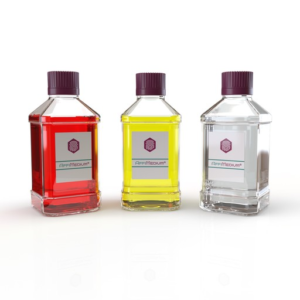
Molecular Formula:
- C₈H₁₈N₂O₄S
The effective buffering capacity of HEPES extends from pH 6.8 to 8.2, which is optimal for most mammalian cells. More technical details about the chemical properties of HEPES can be found at PubChem and NCBI.
Applications of HEPES in Cell Culture
HEPES is widely used in many cell culture applications due to its robustness in maintaining pH balance, especially in conditions where the culture is exposed to ambient air or during long-term storage. Below are some key applications:
- Live Cell Imaging
- HEPES is highly recommended for live-cell imaging experiments. Since microscopy systems often expose cells to room air (which lacks controlled CO₂ levels), HEPES helps maintain pH homeostasis. This ensures that cells remain viable and function normally during imaging. Additional protocols on its usage in live-cell imaging can be accessed at Harvard University and Johns Hopkins.
- Transport of Cells and Tissues
- HEPES-buffered solutions are frequently used to transport cells and tissues between laboratories. Because it provides a stable pH without the need for CO₂, it prevents the cells from undergoing stress during transportation. Studies on the impact of HEPES during transport are available at CDC.gov.
- Media Formulation
- HEPES is a common additive in many commercial cell culture media, such as DMEM (Dulbecco’s Modified Eagle Medium) and RPMI 1640. It is typically included at concentrations between 10-25 mM, though concentrations may vary based on the specific application and cell type. For more details on HEPES in media formulations, consult the FDA’s Cell Culture Standards.
- Electrophysiology Studies
- In electrophysiology experiments, where precise control of the extracellular environment is necessary, HEPES is commonly used to maintain pH during the recording of electrical activity in neurons and other excitable cells. The buffering capacity of HEPES prevents pH fluctuations that could otherwise interfere with the accuracy of the recordings. Learn more about its applications in electrophysiology at Stanford University.
- Protein and Enzyme Studies
- Many proteins and enzymes have optimal activity at specific pH ranges. HEPES ensures that the pH remains consistent during assays, which is essential for reproducible results in biochemical and enzymatic studies. A detailed explanation of protein stability with HEPES buffering can be found on NIH.gov.
Optimal Use and Considerations
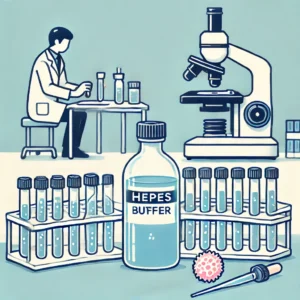
Optimal Concentration: The typical working concentration of HEPES in cell culture media ranges between 10-25 mM. Using lower concentrations may result in insufficient buffering capacity, while higher concentrations could lead to cytotoxic effects. For specific media formulations, consult resources like PubMed.
Storage and Handling:
- HEPES should be stored in a cool, dark place to prevent degradation. When exposed to light, especially UV light, HEPES can produce free radicals, which may damage cellular components. Therefore, it’s important to use light-shielding containers when preparing HEPES-buffered media.
- HEPES solutions should also be autoclaved before use to ensure sterility. Sterilization protocols and detailed guidelines can be found at CDC.gov.
Potential Limitations:
- Light Sensitivity: When exposed to light, HEPES can generate reactive oxygen species (ROS), which may be harmful to cells, particularly in long-term cultures or light-based studies. For this reason, HEPES-containing media should be kept away from light sources when not in use. More about the effects of ROS generation can be explored at NCBI.
- Interactions with Assays: In some colorimetric assays, HEPES may interfere with the results, especially in tests that depend on pH shifts. Therefore, alternative buffers such as phosphate-buffered saline (PBS) might be considered when performing specific biochemical assays. Detailed assay interference data are available on PubMed.
Future Applications and Research
As the demand for more complex and physiologically relevant cell culture models increases, HEPES remains a staple for buffering in advanced techniques such as 3D cell culture and organoid systems. It is also being incorporated into specialized media for stem cell research, where pH control is critical for differentiation protocols. Ongoing studies and research projects can be accessed via NIH and other governmental repositories like NCBI.
In addition, HEPES is gaining traction in bioengineering fields, where it is used to maintain stable environments for tissue scaffolds and biomaterials. Innovations in bioengineering can be tracked at institutions like MIT and Caltech.
Conclusion
HEPES has cemented itself as an essential buffering agent in cell culture, providing robust and reliable pH stability under various conditions. Whether used in traditional 2D culture systems or more advanced 3D culture models, HEPES remains indispensable for ensuring experimental reproducibility and cell viability. For researchers looking to ensure precise environmental control, HEPES is a go-to buffer that consistently delivers, as shown by numerous academic and industrial studies.
For further readings and detailed experimental protocols on HEPES, please refer to reputable sources such as CDC.gov, NIH.gov, NCBI, and FDA.gov.