
DPX Mountant Low Viscosity is a widely used synthetic resin mounting medium in histology, renowned for its low viscosity, excellent refractive index, and durability. It is a critical reagent in the preparation of microscope slides, providing long-lasting clarity and preserving stained specimens for detailed analysis. This article explores the features, applications, and benefits of DPX Mountant, supplemented by authoritative references from academic and governmental sources.
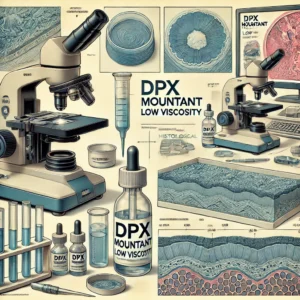
Key Features of DPX Mountant Low Viscosity
- Low Viscosity
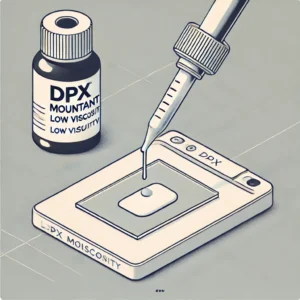
The low viscosity of DPX Mountant enables smooth and bubble-free application, ensuring high-quality slide preparation. It facilitates precise specimen mounting, as highlighted in histology protocols commonly used in academic research. - High Refractive Index
With a refractive index close to that of glass, DPX enhances the optical properties of stained specimens, making it ideal for microscopic imaging. - Rapid Drying
DPX Mountant dries quickly, reducing the time required for slide preparation in high-throughput laboratory settings, such as those in government-funded diagnostic labs. - Long-Term Preservation
Its synthetic resin base protects specimens from degradation, ensuring slides remain clear and intact over extended periods, as recommended by NSF-supported research guidelines.
Applications in Histology
- Tissue Staining
DPX Mountant is a preferred choice for mounting slides stained with dyes such as Hematoxylin and Eosin (H&E), a standard in clinical pathology. - Cytology
Laboratories use DPX for mounting cytological samples, including those analyzed for cancer diagnostics, as detailed in NIH research studies. - Educational Use
DPX Mountant is extensively utilized in teaching laboratories for preparing high-quality slides for student learning, as emphasized by resources from academic institutions. - Research
Its compatibility with immunohistochemistry and other advanced staining methods makes it invaluable in biomedical research.
Advantages for Laboratories
- Durability
DPX-mounted slides are resistant to cracking and shrinking, a feature critical for preserving specimens for archival purposes in museum collections and academic repositories. - Compatibility
It is compatible with various staining techniques and specimen types, as demonstrated in USDA studies on plant histology. - Ease of Use
The ready-to-use formulation of DPX Mountant simplifies workflow, making it a preferred choice for both beginner and advanced users, as outlined in NIH histological guidelines.
Technical Specifications
- Viscosity: Optimized for thin, even application without bubbles (reference).
- Refractive Index: Matches the optical properties of glass, ensuring clarity in microscopy (source).
- Drying Time: Rapid curing under ambient conditions, suitable for high-throughput laboratories (learn more).
Educational and Governmental Insights
- The role of mounting media like DPX in CDC-sponsored histopathology workshops.
- Standard practices for slide preparation detailed in NIH training modules.
- Use of DPX Mountant in USDA-supported plant histology studies.
- Guidelines for cytological staining from NCI.
- Recommendations for durable mounting media in NSF histology programs.
- The importance of high-quality mounting media in NIH-funded biomedical research.
- Use in long-term preservation, as documented in Smithsonian Institution archives.
- Applications in DOE studies on bioenergy crop histology.
- NASA research on histological techniques in space biology.
- Protocols for mounting media use in FDA-regulated clinical trials.
- Insights from PubMed studies on resin-based mounting media.
- NIH reports emphasizing the role of DPX in pathology.
- EPA guidelines on safe laboratory chemical practices.
- Use in academic research laboratories for advanced microscopy techniques.
- Applications in veterinary histology, as supported by USDA Animal Research Centers.
Conclusion
DPX Mountant Low Viscosity is an essential reagent in histology and cytology, offering superior optical clarity, durability, and ease of use. Its wide-ranging applications in research, education, and clinical diagnostics underscore its importance in the scientific community.
For further information, researchers and laboratories can explore detailed resources from trusted academic and governmental websites, including NIH, CDC, and NSF.